
NPS in Healthcare: How Hospitals Use Net Promoter Score (NPS) to Retain and Grow Patients
Published :28 Apr 2026, 11:30 am
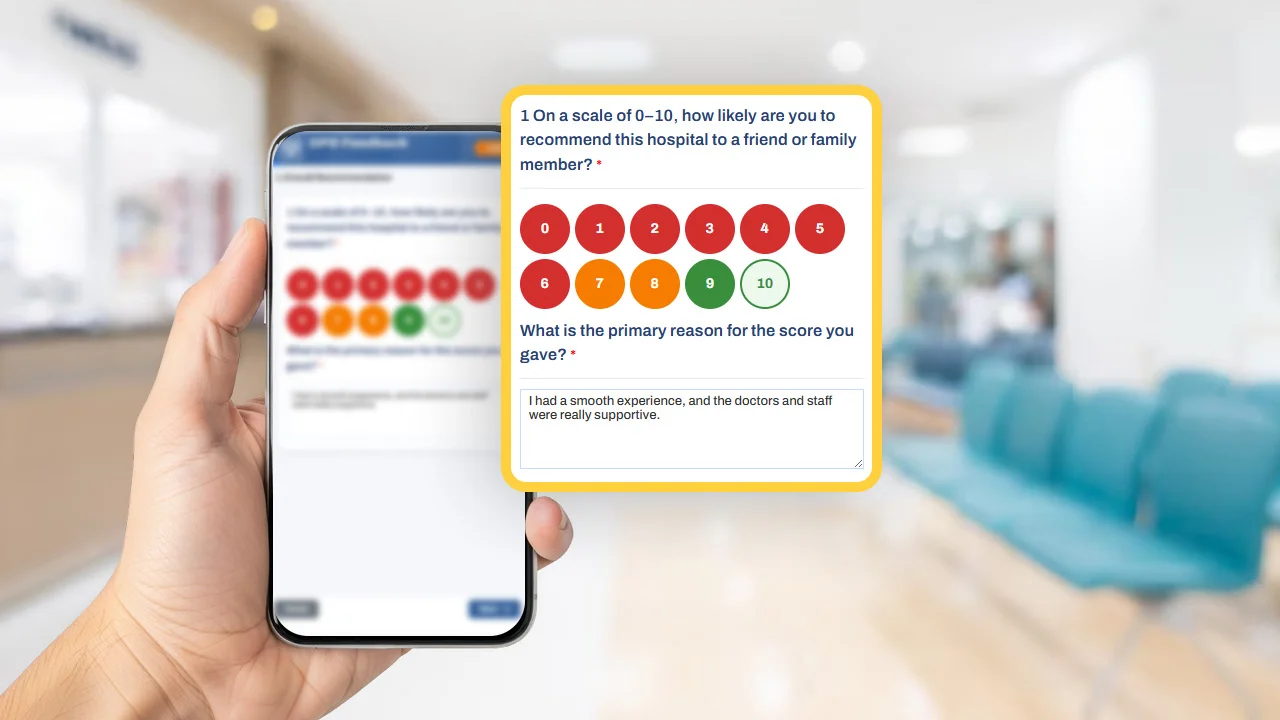
Happy patients don't just come back - they bring others with them.
That's the core idea behind NPS in healthcare. By measuring how likely patients are to suggest your hospital, you gain a clear, honest picture of where your care experience stands and exactly what needs to improve. For hospitals looking to grow trust, retention, and reputation, Net Promoter Score is the metric that helps to makes it possible.
What is Net Promoter Score in Healthcare?
Net Promoter Score is a simple yet powerful metric used to measure how likely patients are to recommend a hospital to others. It is based on a single question asked in an NPS survey:
| Category | Score Range | Behaviour | Impact |
|---|---|---|---|
| Promoters | 9-10 | Loyal, recommend | Growth driver |
| Passives | 7-8 | Neutral | Opportunity |
| Detractors | 0-6 | Unhappy | Risk |
One of the key strengths of NPS in healthcare is how it segments patient responses into three clear groups - giving hospitals a structured way to act on feedback.
- Promoters (Score: 9-10) Promoters are your most loyal and satisfied patients. They are highly likely to recommend your hospital to family and friends, generating powerful word-of-mouth referrals. These patients actively contribute to a higher hospital NPS score and help build your brand reputation organically.
- Passives (Score: 7-8) Passives are satisfied but not enthusiastic. They had a decent experience but feel not strong enough to recommend or criticise. In NPS in healthcare, passives represent a significant opportunity with the right follow-up, they can be converted into loyal Promoters.
- Detractors (Score: 0-6) Detractors are dissatisfied patients who may actively share negative experiences. They are the most critical group to address in any NPS survey program. Identifying and resolving their concerns quickly is essential to protecting your hospital NPS score and preventing reputational damage.
How is NPS Calculated in Healthcare?
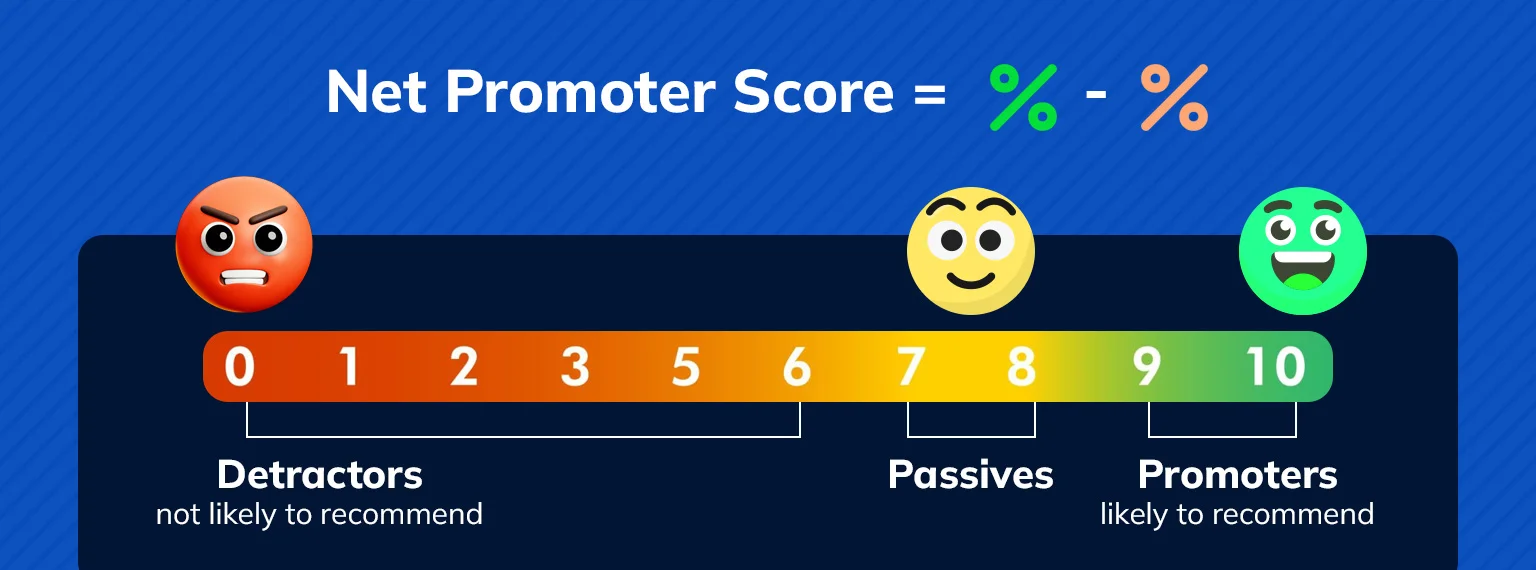
Calculating NPS in healthcare is straightforward:
NPS = % Promoters - % Detractors
Passives are excluded from the formula - they neither help nor hurt the score.
Example: If 60% of patients are Promoters and 15% are Detractors, your Net Promoter Score = 60 - 15 = +45
This score is automatically computed by modern NPS software, giving hospitals an instant, accurate view of patient sentiment without manual effort.
What is the Ideal NPS Score in Healthcare?
The Net Promoter Score ranges from - 100 to +100. Here is how scores are interpreted in the healthcare industry:
| Hospital NPS Score | Rating | What It Means |
|---|---|---|
| Below 0 | Poor | More Detractors than Promoters - urgent action needed |
| 0 to +30 | Good | Stable but significant room for improvement |
| +30 to +50 | Great | Strong patient loyalty and positive experience |
| Above +50 | Excellent | Industry-leading - patients are your biggest advocates |
Top-performing hospitals consistently score between +50 and +70. However, the real value of NPS in healthcare isn't just the number - it's what you do with it.
How to Analyse Your NPS Score in Healthcare?
Tracking your hospital NPS score is only the first step. True improvement comes from deep analysis:
- Segment by Department or Touchpoint Break down your NPS survey results by ward, specialty, or patient journey stage to pinpoint exactly where experience breaks down.
- Track Score Trends Over Time Use your NPS software to monitor weekly or monthly trends. A declining score is an early warning - a rising score confirms your improvements are working.
- Analyse Open-Ended Feedback Most NPS surveys include a follow-up question: "What is the main reason for your score?" Look for recurring themes in Detractor responses and prioritise fixes accordingly.
- Compare Promoter vs Detractor Responses Identify what your Promoters love that Detractors don't experience - then standardise those behaviours across the hospital.
- Benchmark Against Industry Standards Use your Net Promoter Score data to compare performance against healthcare industry averages, giving leadership meaningful context.
- Close the Feedback Loop Flag Detractor responses for immediate follow-up, share Promoter insights with frontline staff, and update service protocols regularly based on NPS survey data.
Why NPS in Healthcare Matters?
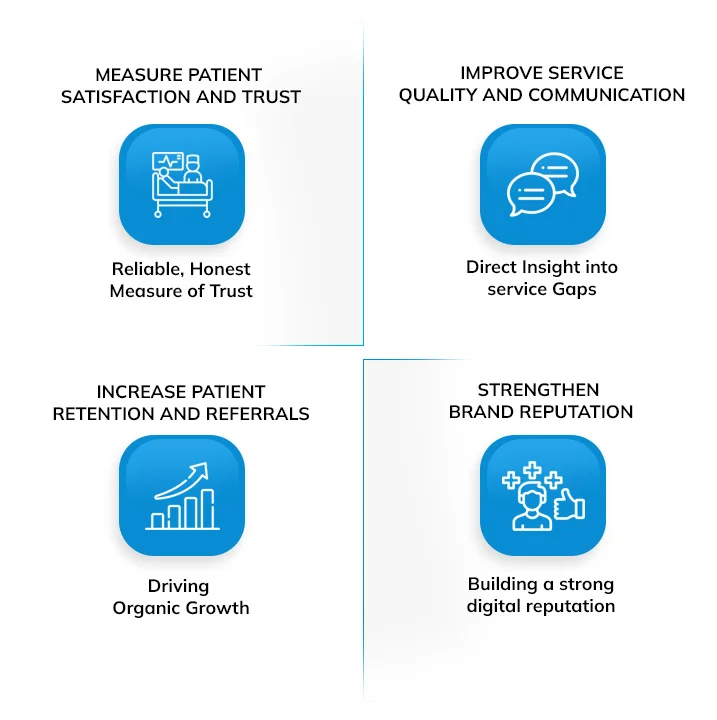
Implementing NPS in healthcare helps hospitals:
- Measure Patient Satisfaction and TrustUnlike lengthy surveys, an NPS survey asks one focused question that patients actually answer - giving hospitals a reliable, honest measure of patient trust and loyalty.
- Improve Service Quality and Communication When Detractors explain their low scores, hospitals gain direct insight into service gaps and communication failures - making NPS in healthcare a powerful continuous improvement tool.
- Increase Patient R etention and Referrals A high hospital NPS score means patients are not just returning - they are actively recommending your services to others, driving organic growth without additional marketing spend.
- Strengthen Brand ReputationNPS in healthcare helps identify Promoters who can be encouraged to leave positive reviews online, building a strong digital reputation that attracts new patients and builds community trust.
Challenges Without NPS Software
- Manual Feedback Collection Without NPS software, hospitals rely on paper forms and manual surveys - making the process slow, incomplete, and unreliable, with little time left to actually act on the data.
- Delayed Response to Patient Complaints Without automated NPS survey alerts, complaints sit unresolved for days.
- Lack of Actionable Insights Manual systems produce raw data with no structure. Without NPS software, hospitals cannot identify trends or understand what is truly driving their Net Promoter Score up or down.
- Difficulty Tracking Hospital NPS Score Trends Without dedicated NPS software, there is no easy way to monitor hospital NPS score over time or across departments - making it impossible to measure whether improvements are actually working.
How NPS Software Improves Hospital Performance?
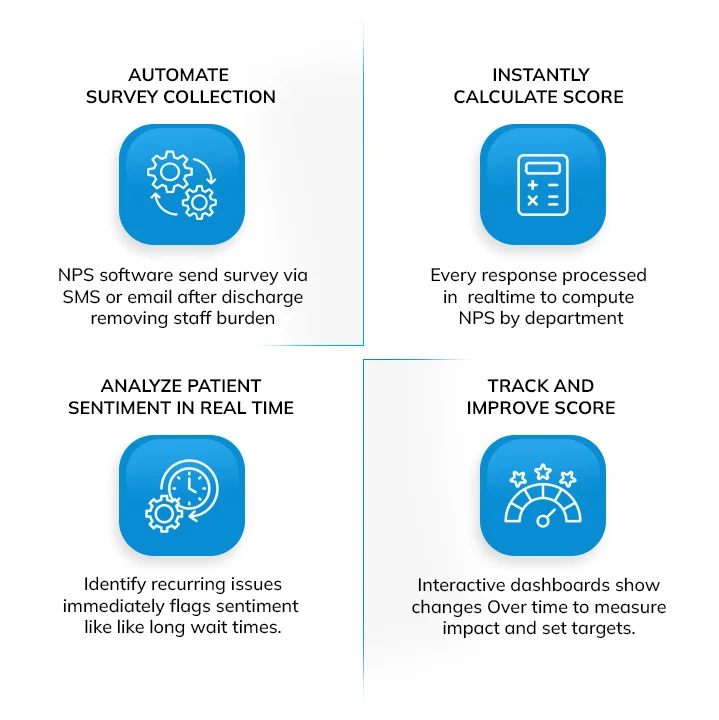
- Automate NPS Survey CollectionNPS software sends surveys automatically after consultations or discharge via SMS or email - removing staff burden and ensuring every patient gets a chance to share their experience.
- Instantly Calculate Net Promoter Score Every NPS survey response is processed in real time, automatically computing the Net Promoter Score by department or time period - no spreadsheets, no manual effort.
- Analyse Patient Sentiment in Real Time When multiple patients mention the same issue - like long wait times or poor communication - NPS software flags it immediately. No manual reading required. Your team gets the insight and can act fast.
- Track and Improve Hospital NPS Score Interactive dashboards show exactly how your hospital NPS score changes over time, helping teams measure the direct impact of service improvements and set data-driven targets.
Case Insight: Improving NPS in Healthcare with sterloCare
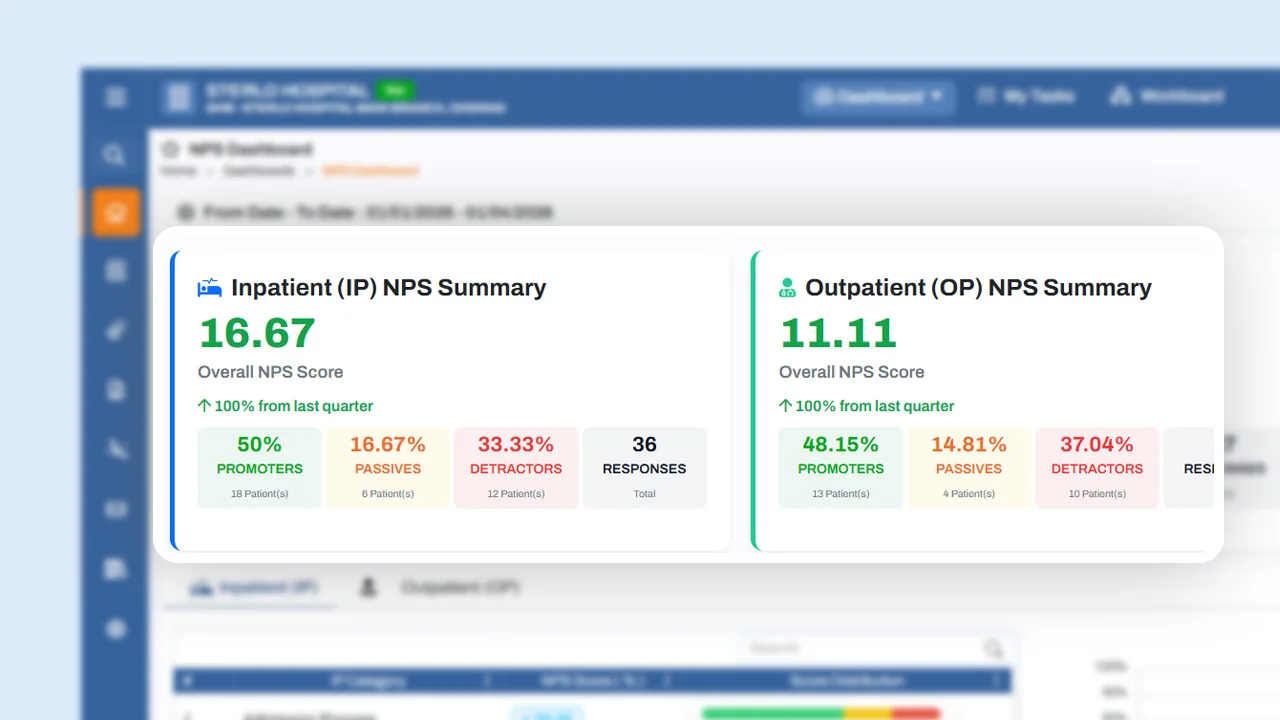
A large multi-chain hospital group deployed sterloCare's NPS software across all their facilities. The rollout was smooth, staff picked it up quickly, and their NPS scores improved in a short time.
Here is how sterloCare made the difference:
- Smart NPS Survey & Customisation
Each department from outpatient to post-surgery care set up their own NPS survey with questions that made sense for their area. No technical help needed. The right questions reached the right patients, making the feedback actually useful a key step in improving NPS in healthcare. - Real-Time NPS Score & Insights
Instead of waiting for end-of-month reports, hospital teams could see their Net Promoter Score as responses came in. Department heads and administrators had one clear dashboard showing the hospital NPS score across every branch at any time, without chasing anyone for data. - Converting Feedback into Action
When a patient was unhappy, the concerned team got an alert right away. Staff could reach out, understand the issue, and resolve it often before the patient even left the hospital. This is what makes a good NPS software worth investing in it does not just measure the NPS, it helps improve it. - Boosting Online Reputation
Patients who had a good experience were prompted to share it on Google Reviews. Across all branches, this steadily built the hospital group's online presence driven by real patient voices, not paid promotions. A higher hospital NPS score followed naturally. For this hospital group, sterloCare turned the Net Promoter Score from a routine metric into something that actively improved care and built trust across every branch, every day.
Conclusion
Patients today have more choices than ever. A single negative experience - left unaddressed - can cost your hospital not just one patient, but everyone they influence. The hospitals winning on patient experience aren't the ones with the biggest budgets. They're the ones actively listening, measuring, and improving through NPS in healthcare.
- sterloCare makes this easy
With automated NPS surveys, real-time Net Promoter Score tracking, and instant alerts for dissatisfied patients, sterloCare gives your team everything needed to protect and grow your hospital NPS score all in one platform. - Ready to improve your hospital NPS score? Book a free demo with sterloCare today and see how the right NPS software can transform your patient experience from reactive to remarkable.
FAQ
- What is NPS in healthcare?
NPS in healthcare is a simple score that measures how likely patients are to recommend a hospital to friends or family. It’s one short question after a visit, and it helps hospitals see where they’re doing well and where they need to improve. - What is a good NPS score for a hospital?
The scale ranges from -100 to +100, where scores below zero indicate a poor experience, 0-30 indicate satisfactory, 30-50 are considered good, and any score above 50 is regarded as excellent. Leading performance-oriented hospitals strive for scores between 50-70, and the mean healthcare NPS. - How does NPS help with patient retention and growth?
Happy patients come back and refer others. NPS helps find those happy patients and also the unhappy ones, so you can fix issues quickly and turn more patients into loyal promoters who grow your reputation. - What’s the difference between NPS and HCAHPS or NABH patient experience surveys?
HCAHPS and NABH surveys are more detailed and compliance focused, done at specific intervals. NPS is simpler and more frequent, giving real time feedback on overall loyalty that complements those formal surveys. - Can NPS score predict online reviews and Google ratings?
Yes. Patients who score 9–10 on NPS are more likely to leave positive Google reviews. Hospitals that actively track NPS and ask satisfied patients to share feedback often see their online ratings improve.